
What You Believe Shapes How You Heal
Your beliefs aren't separate from healing - they inform every part of it.
Most people think that healing happens to them.
They take the pill, have the surgery, perform the rehab, receive the treatment - and wait for the body to comply.
But there's lots of evidence now confirming what some people have known and spoken about for ages:
What you believe about your treatment, changes your results.
Your beliefs affect your biology.=
Not in a "woo-woo" kind of way, but in a very real and measurable sense.
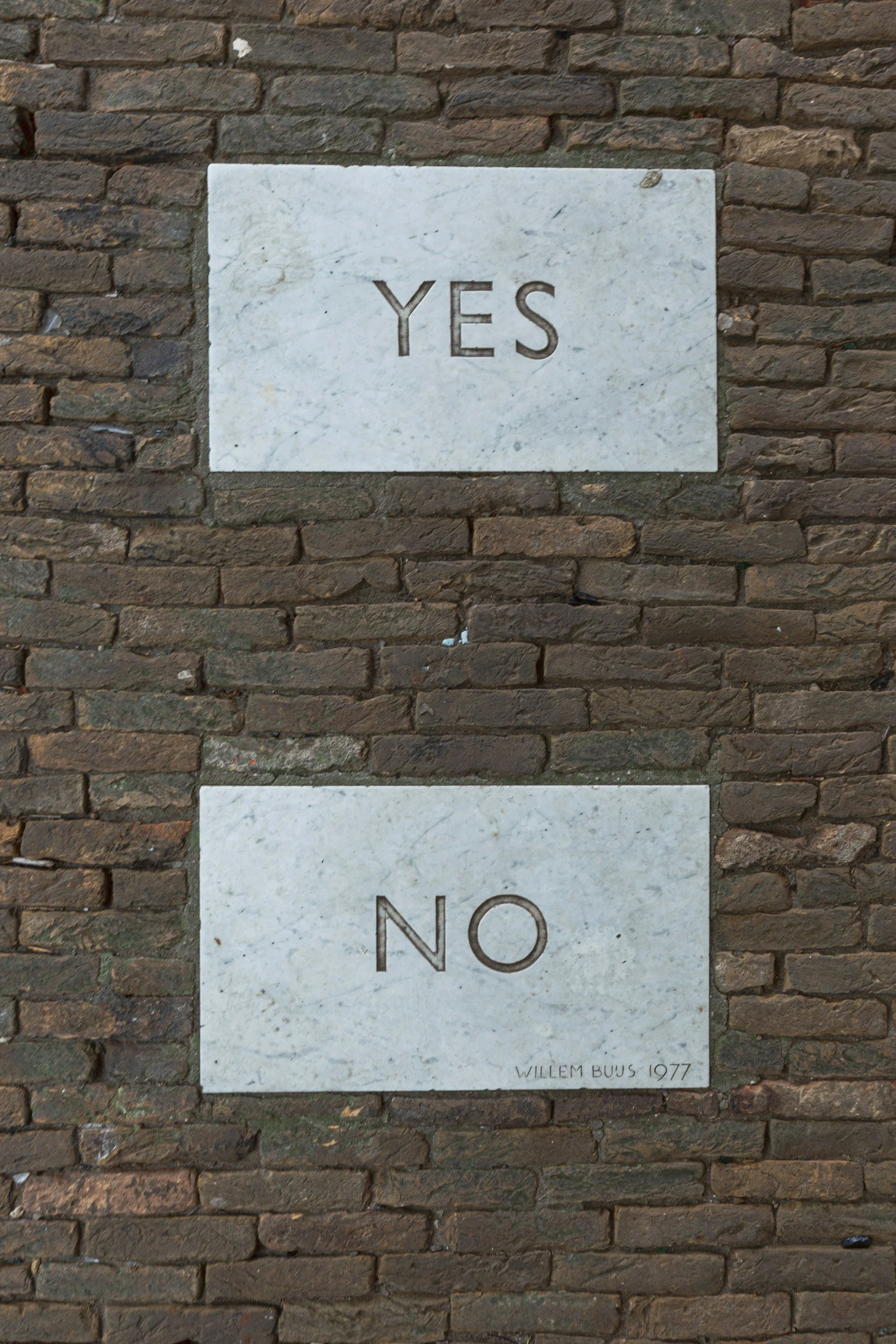
It IS in your head
You've probably heard the phrase "it's all in your head" used as a kind of dismissal - as if what’s happening in your head isn't real. This just isn’t the case.
Your brain is a prediction machine. It doesn't just respond to what's actually happening - it responds to what it expects to happen. It responds to what you think will happen.
Sometimes treatments or interventions work, in part or in full, because of the belief that they would, despite there being no scientific study or explanation for it.
These are often referred to as “placebos”, and are either considered lucky, or are sometimes dismissed altogether.
Our culture treats placebos as noise to be filtered out, not signal to be understood.
But what if we didn’t dismiss placebos, but sought to embrace and understand them?
The knee surgery that wasn't...
Here are two studies that I find really fascinating.
Placebo knee surgery.
In a study published in the New England Journal of Medicine, 180 patients with knee arthritis were split into groups.
One group received a real arthroscopic surgery.
Another group received a ‘sham’ procedure: anaesthetic, skin incisions, and a fully simulated surgical experience, but no surgical instrument was inserted and no repair was made. This group were completely blinded to the fact they hadn't received actual surgery.
The groups were followed at multiple points over two full years, measuring both pain and function.
The results? At no point in that two-year follow-up did the ‘real’ surgery group report less pain or better function than the ‘sham’ group.
The placebo surgery performed identically to the real surgery!
The Milkshake Experiment.
In this study, participants drank a shake with the exact same number of calories on two separate occasions:
The first time, it was labeled as an indulgent, high-calorie treat.
The second, it was presented as a sensible, low-calorie option.

Researchers measured a hunger hormone called Ghrelin before and after each drink.
When people believed they were drinking something indulgent, their bodies signalled greater satiety - ie. they felt more full.
When they believed it was the low-calorie option, they felt less full - despite consuming the exact same shake, with the same exact calories.
Different belief = Different hormonal response.
So what can we take away from these examples?
Our beliefs, and the meaning we attach to our experience - literally changes the biology of the experience.
The so-called placebo effect might not be fake healing to be dismissed, but rather - the body's own healing capacity, just more fully activated by context, trust, and belief.
Where do these beliefs come from?
The beliefs running your body today were largely installed before you turned seven.
In early childhood, the brain operates mostly in what is called a theta brainwave state - the same open, receptive state that hypnotherapists use to help people change deep habits.
You might think of it like the default operating system on a brand new computer. Whatever software gets installed first is the default state, and continues operating until we upgrade to newer software.
In this childhood theta state, information is absorbed directly, without filtering or questioning, and we can retain these early beliefs into adulthood.
Here are a few programs that many people are still running:
1. The “Runs-in-our-family” program
"Obesity runs in our family”, "My mum also had eczema as a child" "Dad has high cholesterol so I probably will too"
Heard and reinforced enough, these statements become unconscious predictions that your brain works hard to fulfil.
2. The “Diagnosis-as-my-identity’ program
A diagnosis is a permanent label on a changing body state.
When a diagnosis isn’t framed as a temporary departure from balance, it can become part of our identity - and quickly turn from a temporary condition, into a life sentence.
This is the ‘Nocebo’ effect in action (the evil twin of the Placebo)
Tell someone they have a degenerative condition for example - that their spine or their knees are “bone-on-bone”, and the body often sets about confirming it with more pain and less mobility. The label shapes the expectation, and the expectation shapes the body.
3. The “It’s-just-old-age” program.
Ever come across people who don't look or act their biological age?
My aunt Judy is one of them…she maintains a child-like playfulness that defies her biological age in her 70’s.
Age isn’t just a number.
I’ve seen some people in their 80’s much healthier than people in their 50’s. For this reason, I sometimes find myself squirming internally when clients mention that their symptoms are “just a part of getting old”.
Research shows that people who hold more positive views of ageing live longer than those who don't (by an average of 7.5 years!) Not bad for just holding different beliefs!
So there’s both good and bad news.
The bad news is: the vast majority of our daily thoughts, behaviours, and stress responses run on autopilot - driven by these subconscious programs we unknowingly inherited as kids.
The good news: these programs aren't permanent, and we can rewrite them.
Where to draw the line...
A necessary disclaimer before going further.
None of this replaces emergency medicine. When there's acute trauma, or severe bleeding, or life is in immediate danger - we shouldn’t believe ourselves better. Diagnoses and labels are necessary in these instances.
But we can hold two truths at once:
Modern healthcare is extraordinary.
Human belief is biologically powerful.
These aren't in conflict, but they do sometimes operate in different territory.
The interesting territory is the large middle ground - chronic conditions, lifestyle-related diseases, that aren’t life threatening.
Here, outcomes are shaped not only by a procedure or prescription, but by the story surrounding them.
Significant surgery, for example, often functions as a kind of psychological reset. It creates a clear before-and-after. It legitimises the condition. It costs several thousands, if not tens of thousands of dollars, and demands significant time off to recover. Post-surgical rehab is often taken more seriously than the identical rehab offered without an operation - which raises an uncomfortable idea worth sitting with after our knee surgery example: could the rehab alone have been enough?
We might not know for sure. But we do know this: your belief that improvement is possible amplifies whatever else is happening biologically.
The future of healthcare probably doesn't come down to choosing between science and belief, but integrating them together honestly.
Technical skill matters. Evidence and research matters.
But so do trust, narrative, and the therapeutic relationship between person and practitioner. Care delivered with clarity, in genuine partnership between person and practitioner, will outperform the same treatment delivered with doubt, skepticism and poor rapport.
My New Year's Eve experiment
A few months back, after a New Year's Eve BBQ with a big group of friends, a gastro bug moved through our household with the intensity that gastro bugs typically do.
Our son went down first - spontaneously vomiting across the living room. Our daughter followed within the hour, then again. Then our son again. There were multiple showers. Every towel we own was used. At one point I wore the contents of my son's stomach on my beard, face and shoulder while I crouched down drying him after a shower.

My partner returned home just in time to get a whiff of the house, and proceeded to join the ordeal - unwell for the next two nights.
Here's where my little experiment began.
With absolute certainty, I knew i’d been heavily exposed. Instead of bracing for the inevitable, I entertained the thought: Maybe if my immune system is doing what it's designed to do, I might be okay. This wasn't denial, or me pretending to have super-immune powers. It was just a quiet confidence in the cleverness of my body.
As it turned out - I didn't get gastro when my partner and kids did. Did my belief in my body change the outcome? Who knows…
I found out after that some others from that gathering became ill. And some didn't.
This was an interesting reminder that health is always an interaction between a body, a mind, and the environment.
And that the body and mind aren’t passive victims, but can be active participants.
What this means for you
The mindset you bring to an intervention is part of the intervention.
Question the programs that are running your health. What’s the story you tell yourself about health? About your relationship to symptoms? About exercise? About stress?
If you're working on sleep, nutrition, or nervous system regulation - treat your self-care less like punishment and more like partnership. If you eat something indulgent, enjoy it fully. Layering guilt and stress on top (like I did for so long) is its own biological event. If you have a night of poor sleep, or skip a workout - don’t beat yourself up!
When seeking care, choose practitioners you trust - then actually trust them. Ask questions until their plan makes sense to you. Understand what you're doing and why. Alignment between client and practitioner isn't a soft, nice-to-have quality - it's part of the healing process.
Not just positive thinking
Belief alone probably doesn’t heal everything.
But what you believe about your body's ability to heal, can either amplify or undermine, everything else you do.
The same chiropractic adjustment, the same exercise, the same treatment - lands differently in a body that believes it can recover versus one that's been told it can't.
Your body has an extraordinary, innate capacity for healing. It's been doing it your whole life - mending cuts, fighting infections, recovering from injuries you've long forgotten.
The question isn't whether your body can heal.
The question is - what story are you telling it?
Mick
What's one belief about your body that you inherited - and never once questioned?
