
Your most valuable asset
Money, time or something else completely?
For most of human history, accumulating resources - food, land, livestock - was a reliable indicator of survival. More stuff meant more winters survived.
So material wealth was an important asset.
Modern culture is slowly waking up to the fact that material wealth, though necessary - perhaps isn’t our most valuable asset.
We know this if we ponder the hypothetical experiment of trading places with someone like Warren Buffett - one of the wealthiest humans to ever live, whose worth well over $100 billion.
But who is also 95 years old.
Most of us wouldn't take that trade.
Which shows that we intuitively sense that time is more important than money.
So maybe time is our most valuable asset..?
But consider the Greek myth of Tithonus.
Tithonus was a mortal man who asked Zeus to grant him eternal life - which Zeus did.
But he forgot to also ask for eternal youth.
So Tithonus lived forever - but growing older, more frail and in ever-increasing pain.
This myth makes the point that we don't want infinite time. We do want time, but with a body that works well.
So maybe health is our most valuable asset.
But then we consider the people who are physically well by every measure - but are still miserable.
Because their marriage is falling apart, or they're estranged from their kids, or they have no close friend they could call on in a crisis.
Research consistently shows that the quality of our relationships is one of the best predictors of both happiness and longevity. The Harvard Study of Adult Development - one of the longest-running studies on human wellbeing - found that close relationships, more than money or fame, keeps people happy throughout their lives.
So maybe relationships are the most valuable assets..?
We could keep going here….
Purpose. Meaning. Mental health. Freedom….
But I think they all point to one overarching asset, which is where I currently find myself landing:
Our attention
Attention is the intersection of time, relationships, health, meaning, and freedom.
Not just time - but what we do with it, who we do it with, and how we do it.
Attention is where we direct our awareness and what we choose to be present for.
Everything that matters - every experience, every connection, every moment of meaning - passes through the gateway of attention first.
Which makes what's happening to it in modern times worth paying close attention to.
On paying attention…
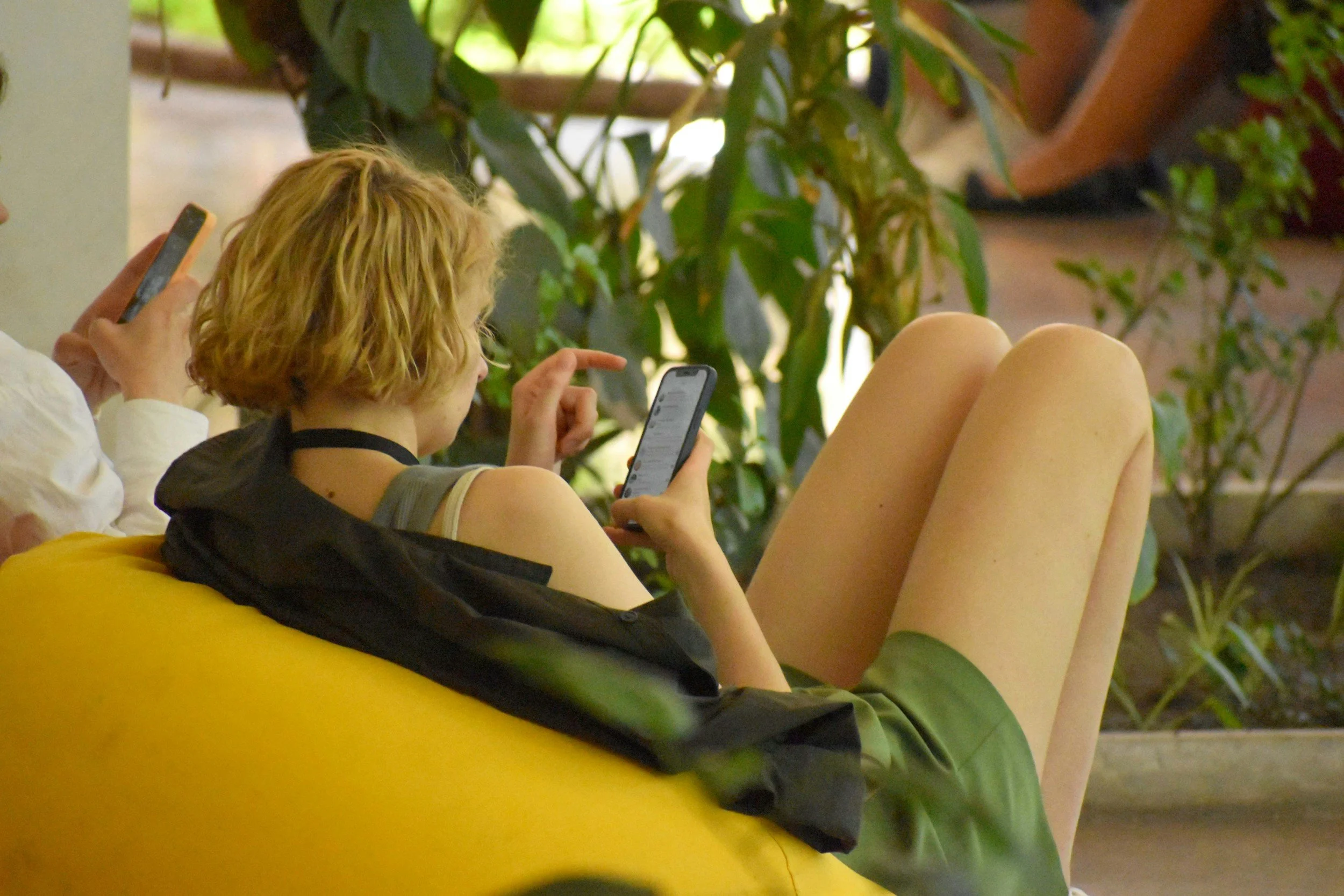
Why do we say we pay attention?
Not give attention. Or use attention. But pay it - like a toll.
Like a price has to be paid for the exchange of you being present.
Turns out, that’s exactly what's happening, with all of us.
We're living through the greatest theft of human attention in history, without even knowing we're being robbed.
A machine built to distract
Social media platforms and news outlets don't make money when you feel calm and satisfied.
They make money the more you scroll, watch and engage.
So they hire very clever people - psychologists, behavioural scientists - to carefully engineer an online experience designed to hijack your attention, usually by triggering emotions like outrage, disgust and fear.
Cal Newport has been sounding the alarm on this for a decade now. In Deep Work, he argued that the ability to focus without distraction is becoming one of the rarest and most valuable skills in the modern economy. In Digital Minimalism, he claims our relationship with technology isn't just unproductive, it's eroding our capacity for a meaningful life.
The system is working exactly as intended.
It’s probably just not working for you.
Pathologising distraction?
In the last two decades, diagnoses of Attention Deficit Disorder and ADHD have skyrocketed.
The mainstream narrative is that something is going wrong in our brains.
What if the issue isn't that millions of people suddenly developed a neurological disorder - but that we've built an environment so perfectly engineered for distraction that sustained attention has become nearly impossible for anyone?
I’m hesitant on whether this inattention boom is a true “disorder”.
I’d consider it cause and effect, perfectly functioning brains adapting to a misaligned environment.
I’m not dismissing the real experiences of people who genuinely struggle with attention.
But it is worth asking the question, before we reach for a diagnosis, have we looked honestly at the environment we've created?
The link between attention and meaning
Boredom, inattention, and a lack of meaning tend to cluster together.
When we're bored, we reach for our phones. When we're on our phones, we fragment our attention. When our attention is fragmented, we lose the capacity for the experiences that give life its meaning.
Which makes us feel more empty… which makes us more bored… and the cycle continues
The phone isn't the cause of this loop. It's the escape route.
And the fact that we keep reaching for it says something important.
Not that the phone is the problem, but that our lives aren't engaging enough to hold our attention.
"All of humanity's problems stem from not being able to sit quietly in a room alone."
Blaise Pascal wrote this in the 1600s - centuries before the smartphone. He was pointing at something fundamental about the human condition.
We are deeply uncomfortable with stillness. We'll do almost anything to avoid being alone with our thoughts (see the 2014 study where participants “preferred to administer electric shocks to themselves instead of being left alone with their thoughts1”.)
The cost of inattention
I see versions of this play out constantly, both in my own life as well as others.
The person who can't sit through a meal without listening to a podcast, music or TV in the background. The parent who's physically present but mentally somewhere else while their kids tug at them to put the phone away and play. The business owner constantly inbox-watching, ready to problem-solve at a moment’s notice.
I’ve been all of these..
The irony is that the very thing we're chasing - connection, satisfaction, a sense that our life matters - is being eroded by the tools we're using to find it.
How to take it back
In full transparency - I don't have a clean final answer.
I'm still in a love-hate relationship with this tech:
I’ve ditched socials for years, before returning.
I’ve traded my smartphone for a dumbphone for a good year or two - before switching back for the camera and access to my appointment book.
I've used app blockers, screen time limits and news feed eradicators.
I've culled email subscriptions and strived for inbox zero.
I've declared phone-free zones that lasted days or weeks before quietly fading.
What I've learned from my personal experiments - is that there's no single intervention that sticks forever.
Over time, I've been refining my use, bit-by-bit, moving slowly in the direction of : using technology more for me, rather than being used by it.
With some self-compassion, each experiment teaches me something. Each boundary - even the ones that clearly overstepped - leaves clues.
So if you feel like you spend more time that intended on a phone, or engaging with tech - here's some suggestions. Not a prescription, but a starting point:
Environmental design first.
Willpower isn't the problem - the environment probably is. Get rid of your notifications and attend to your phone on your time. Try your phone in greyscale. Put valuable apps on your home screen, and delete or move the rest. Add friction where you can. Phone-free zones and Phone free times (within a hour of waking/sleeping is ideal). Log out of your socials for a week - you won’t die 😄
Practice doing nothing.
Cal Newport prescribes ‘Solitude’ - states of being free from the inputs from other minds.
Identify where you can practice solitude during your day - maybe drive in silence, or resist pulling out your phone in any downtime you have waiting before an appointment.
An Experiment:
Can you sit in a quiet room for 10 minutes without distraction.
No podcast, no scroll, no TV, no music. Just you and your thoughts.
It might feel uncomfortable - but that’s the point. You’re rebuilding a brain function that’s been neglected.
Fill the meaning gap.
What looks like phone addiction is really a meaning deficit in disguise. Genuine connection with other people is one of the fastest ways to feel less empty. So is making things - cook a real meal, build something with your hands, learn a skill that has nothing to do with your job. Create, don't just consume.
Find your flow.
Flow states - those periods of deep absorption where time disappears - require sustained attention, and they reward it with a sense of presence no feed can replicate. Many forms of exercise offer this opportunity - Tennis does this for me, but even a walk without my phone does too.
Get outside.
The research is clear: even twenty minutes in nature measurably restores your capacity for attention. Your brain wasn't designed for the amount of dense information delivered through your screen. Give it something slower to look at.
Consider your Chiropractic care!
Dr Heidi Haavik, a chiropractic researcher has shown that Chiropractic care influences the brains “Salience Network”, responsible for identifying which internal and external stimuli your brain considers important for your attention. Look after the nervous system that chooses where you direct your attention.
Final thoughts
We aren’t broken. We’re just distracted - for profit, at scale, by design.
And if the last couple of decades are any indication, screens and tech are only going to become more embedded in what we consider a "normal" life. This trajectory isn't slowing down.
Which means the work of reclaiming our attention isn't a one-time decision. It's an ongoing, conscious choice - made and remade, imperfectly, over time.
Cal Newport made his choice radically - no social media, full stop. Most of us won't go that far, but he’s surviving fine…
Presence begins with attention - and your attention is the lens through which every aspect of your life is experienced.
The default settings of modern life are not set up in our favour, but we can choose our own settings.
The challenge isn’t whether you can reclaim them perfectly - it's whether you're willing to keep trying.
Until next time,
Mick
~ Feel like you’re addicted to your phone? Cal Newport describes a ‘Digital Declutter’: a 30 day break from optional digital tools like social media, apps, and unnecessary online activities - during which you reflect on what tech use truly adds value to your life. After 30 days you reintroduce only the digital tools that serve your goals and well-being. I did it a while back and found it a super helpful reset. Reply and let me know if you’d be up for it and we can do it together!
