
The theory you've never heard of that is quietly running your life.
I recently finished listening to the Modern Wisdom podcast episode with Dr. Stephen Porges - the man who pioneered Polyvagal Theory almost three decades ago.
I've been familiar with Porges work for a few years now, and it's informed much of the Chiropractic care I strive to provide. But hearing him speak in a more relaxed format for the general public - rather than the inaccessible, research-dense books that I've done most of my reading from - made me realize how necessary it is for all of us to grasp and understand, regardless of our current health status.
So what is Polyvagal theory (PVT) and why should you care?
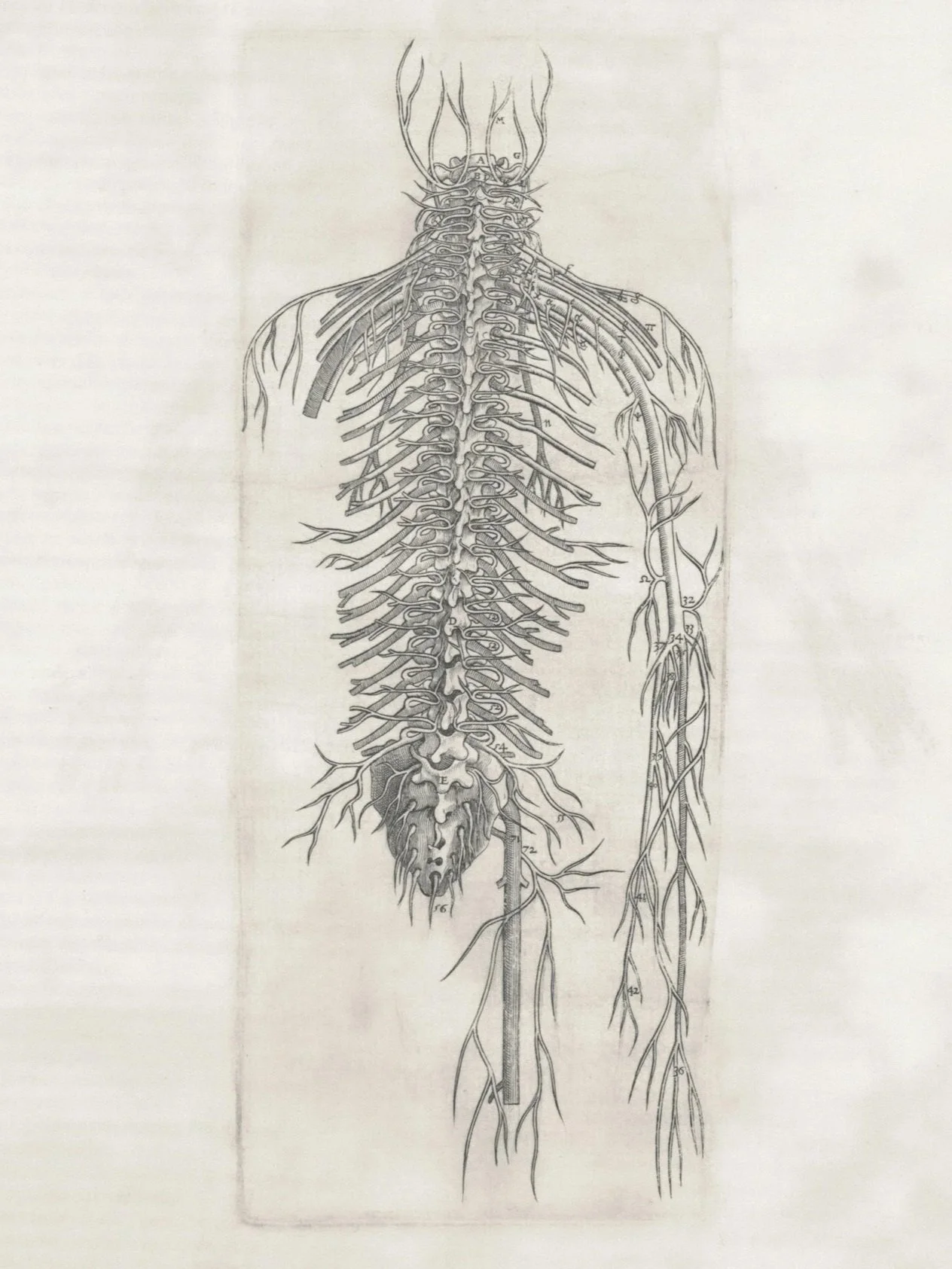
You've probably heard the term "Vagus nerve" thrown around lately - and how practices like cold plunges and breathwork can tone or stimulate it. And it’s really great if you have! The Vagus nerve is the physical hardware that this whole theory runs on.
It's the longest nerve in your body, running from your brainstem down through your throat, lungs, heart and gut. This single nerve is actually two distinct pathways (hence the term 'poly’-vagal) which evolved at different points in our history, that map directly onto the states we’ll look into later.
But for now, when people talk about "Vagal tone", they're really talking about how well the Vagus nerve - specifically the ‘safe and social’ pathway is working (the one that makes us human and connected)
Here's the premise of the theory in simple terms.
Your body is always asking one question underneath everything else:
Am I safe?
In a process called neuroception - your nervous system constantly runs a background scan - all day, every day - checking the room, checking the tone of other voices, checking facial expressions and body postures, for whether the people you interact with are friend or foe. Whether your environment is safe or not safe.
The critical thing to remember - is that this process isn’t conscious. You don't decide to do it - it happens in your body and nervous system, before your rational brain has even caught up to explain why you might feel tense, or at ease.
This scanning process determines what Porges calls the Autonomic Hierarchy - which basically describes the three settings your nervous system can select between:
Safe and Social - this is the state where we’re calm, connected, creative and curious. This is our body’s “thrive” state - where we can digest food, heal tissue, build resources, think clearly, laugh and find joy in life.
Fight or Flight - in this state, we are mobilized, defensive, scanning for danger, ready to act.
Shutdown - the oldest and most primitive setting of our brain, where the system collapses inward to conserve itself when nothing else has worked.
We move through these states constantly, mostly without noticing, according to our stressors and life demands.
However, if a nervous system gets stuck - chronically scanning for threat, chronically bracing - it can produce a quite exhausting, unresourced state that no condition heals well in.
So, the key takeaway:
All healing requires safety first.
Even the perfect treatment plan or the best intervention will likely fail if the body doesn't first register safety. Tissue healing takes a back seat to anxiety and defence-mode.
You cannot out-medicate it, out-supplement it, or out-exercise it.
You can’t force your way to healing through a nervous system that doesn't feel safe.
Which brings us to the third leg of the theory - the one I think gets overlooked the most: Co-regulation.
We don't find safety alone. We find it through connection with other regulated nervous systems. We learned this from our parents and early caregivers - it was our first survival strategy.
A calm voice, a steady presence, eye contact, physical closeness and touch.

Ash and I watched David Attenborough’s A Gorilla Story documentary on the weekend and it was just as evident with one of our closely-related cousin species.
The Gorillas’ entire survival (not just their comfort) depends on them staying physically close to the group. The one Gorilla that got ousted from the tribe and lived alone in the forest wasn't just lonelier. Its social and physical wellbeing declined, its behaviour declined and it was ultimately banished from its family and home, putting his life at risk.
Their nervous systems are built, literally, around each other's presence. And as humans, we are not so different…
We’ve just built a culture that totally forgets this.
Here's where this ties back in to a massive blind spot of modern healthcare.
We've built entire systems of care - hospitals, clinics and practices that almost never ask whether the caregivers are regulated.
Are your doctors and healers whole and healthy in themselves? Do they sleep well and exercise?
Is the system that's meant to heal you flourishing? Or does it rely on rushed, exhausted, under-appreciated practitioners working 12-hour shifts, running on caffeine and adrenaline?
We can’t co-regulate others, if we’re not first regulated ourselves.
A practitioner’s care for others, might only be as good as their care for themselves.
Depleted nervous systems cannot lend safety to another’s. But they can lend their dysregulation.
I think about this a lot in my own practice. I’m obviously biased, but I think holistic chiropractic care, is one of the most naturally polyvagal-informed interventions there is. In two ways:
Firstly, the spine houses and influences the very nerve pathways this whole theory is built on. Specific adjustments into the nervous system can directly influence vagal tone and help shift someone out of that stuck fight-or-flight or shutdown state, toward safe and social.
But secondly, the hands-on care is only half of it. It's also about having a regulated caregiver that can walk alongside you through the uncertainty of life, when pain can be loudest and faith in one’s body can be thinnest.
A consistent presence. A calm studio. A practitioner who isn't rushed or burnt out.
I see it as a role of mine as a caregiver - as best as I can - to ensure that I'm showing up for clients whole: well-slept, well-nourished, well-exercised and well regulated - to provide a steadiness that is its own form of co-regulation, arguably as important as the spinal care I deliver.
So what does dysregulation actually look like day to day?
Fight-or-flight signs:
Racing or pounding heart rate
Forward head posture, rounded shoulders
Clenched jaw, tight shoulders and neck
Shallow or rapid breathing
Restlessness or irritability
An anxious mind that won't stop scanning for the next problem, especially before sleep.
Trouble switching off, even when you're meant to be resting
Shutdown signs:
Heaviness or fatigue that sleep doesn't fix
Brain fog
Flatness or emotional numbness
Low motivation
Feeling disconnected from your body or the people around you
Sluggish digestion, no matter what you eat
Suppressed immunity - recurrent colds/infections
So my invitation to you for living a more polyvagal life?
Use your eyes, throat, lungs and gut:
Eyes - This is known as the Basic Polyvagal exercise - Whilst keeping your head centered forward - turn your eyes all the way to the right for 30 to 60 seconds. Return your gaze forward and rest for a moment, before turning your eyes all the way to the left for 30 to 60 seconds. You may notice the need to yawn, swallow or sigh, indicators that the Vagus nerve has been stimulated.
Throat - low-level humming also stimulates the Vagus nerve. So humming your favourite song, or taking deeper breaths before exhaling long hums can be a great practice at home (you might get some weird looks at work..!) Singing can also do the same - so belt out your favourite tune in the shower.
Lungs - Breathe - any breath practices that have your exhales longer than your inhale tend to move you toward a calm and connected nervous system state. The popular 4-7-8 technique (inhale for a count of 4, hold for 7, exhale for 8) can be done in any spare moments during your day (you can do this one incognito at work)
Gut - physical stimulation of the abdomen stimulates the sensory nerves of the Vagus nerve. Lying on your back and with both hands placed flat on your abdomen, use gentle to moderate pressure, to massage in slow, clockwise circles. Another alternative is with the aid of a foam roller, or soft ball - laying face down over these, rolling side-to-side and back and forth across your abdomen, whilst maintaining the exhale-focused breathing mentioned above.
None of these require huge efforts of time or money. But consistency with these practices, will move you into the healthy, safe and social state that nervous systems thrive in.
So take this opportunity to simply reflect - how are you showing up to your daily life?
Safe and social? In fight-or-flight? Or in shutdown states?
And what impact is that having on those closest to you?
None of these are right or wrong, they’re perfect given your current life circumstances.
And knowing about them - might allow you to more deliberately change your circumstances if the resulting state isn’t one that you're happy with.
If you’re experiencing more of the fight-or-flight or shutdown symptoms, Polyvagal-informed bodywork like Chiropractic care can help you experience more of the safe and social ones.
More on this soon. In the meantime, the full conversation with Dr. Porges is linked below if you're interested.
Mick
~ Have you ever heard of PVT? If you have any further questions, just hit reply - this topic is a biggie..!
