
Why our "healthcare" system doesn't create health.
And the question your doctor probably doesn't ask
The Paradox of Modern Health
Consider this: we live in the most health-informed era in human history: More research, more technology, more experts, more spending than ever before.
More medications, more surgeries.
Yet, we’re arguably the sickest we’ve ever been:
Chronic diseases are rising, two-thirds of the population are overweight or obese, and Anxiety & Depression diagnoses are quickly becoming the norm.
This equation doesn’t add up.
“More” isn’t working.
Part of the reason lies in something we rarely question….
Our “healthcare system” fails to acknowledge an obvious truth, resulting in all our downstream behaviours and poor outcomes.
Consider an analogy that helped me re-frame how I think about modern healthcare.
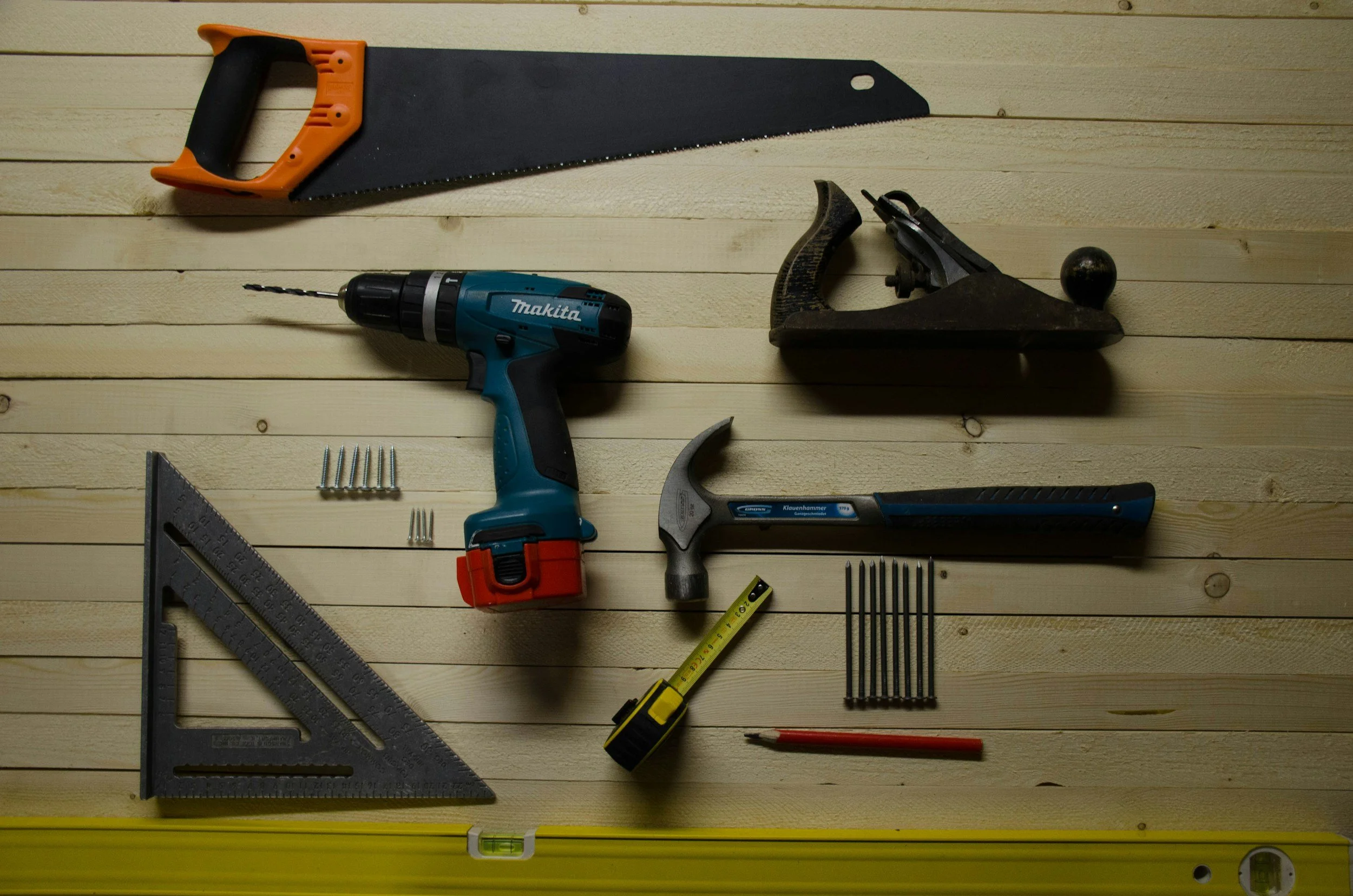
The Right Tool for the Right Job
Imagine that you neglected to do regular maintenance on your house.
A rusty pipe leaked water onto some faulty wiring, sparking a fire. Your smoke alarm signals something is wrong. What started as a small fire, quickly engulfs your entire house in flames.
You call the fire department. They quickly arrive with axes and firehoses.
They break down your doors and windows, dousing your house with water.
If they arrived in time, they save your house from being totally destroyed.
Now you’ve escaped the worst-case scenario and saved your house, you’re left with the job of rebuilding it to restore it to being liveable and functional again.
Who do you call for help now? The fire department again?
You don’t call the fire department to rebuild your house, because you know that they’re not the right ones for the job.
Why not? Because the tools they have (axes & fire hoses) are necessary for saving the house from burning down, but not the right tools for rebuilding it.
Instead, you call tradies:
A Builder. Electrician. Carpenter. Plumber.
They bring their building tools - Hammers, drills, nails, wiring, blueprints, timber and pipes.
With time and patience, they rebuild the foundation, addressing the cause of why the fire started in the first place to ensure it doesn’t happen again.
When your house was on fire, you didn’t think twice about calling the fire department. Right people, Right tools.
Had you called the electrician or builder - they would’ve arrived holding drills and hammers, looking pretty silly while your house burnt down. Wrong people, wrong tools.
But when it comes to rebuilding houses - axes and firehoses don’t work. In fact, using these tools may cause more damage.
This is where we find modern healthcare today….
Axes and firehoses for everything…
The current system relies heavily on two tools (primarily medications and surgery)
And because these tools only work once a condition has progressed so far- we have to wait until our body is “on fire enough” before we start taking action.
If we consider these our only tools, we can’t proactively address health concerns in their early stages, potentially preventing them altogether.
It’d be like calling the fire department for knocking a candle over - something that you could address yourself quite easily.
Chronic diseases of today - aren’t emergencies.
They’re slow, accumulative processes - taking years and decades.
They’re the result of living in conditions for which our bodies haven’t evolved, and require a different approach entirely:
An approach where we define how healthy a body is, by how well it’s functioning - not by what symptoms or diagnoses it has.
This approach requires the proactive, tradies approach - not the reactive, fire departments’.
The tradies are the Chiropractors, Naturopaths, Personal Trainers, Physio’s, Osteo’s, Chinese Med Practitioners - each with their own expertise and a focus on keeping the house maintained before any fires break out.
Medications and surgery, don’t cure problems that are caused by a chronically poor lifestyle
Don’t get me wrong here - Emergency medicine is extraordinary. It absolutely saves lives and is absolutely necessary.
But these tools are not designed to proactively build health - and we burden the system when we become reliant on it to put out fires caused by our personal habits and lifestyle choices. Especially if we could’ve prevented the fires in the first place…
Do you treat the symptom or correct the cause?
So what’s the one question to ask, that your doctor may not have?
Is the human body a self-healing, self-regulating, self-adapting organism?
To me, this is one of the most self-evident truths.
You cut your finger, give it a few days, and the body heals itself.
My entire Chiropractic practice is founded on this understanding: that the body is intelligent, and has the ability to adapt and maintain balance - if we give it the right conditions.
If that's true, some simple logic follows: symptoms are signals from a clever body trying to adapt and heal.
Most conditions come down to too much of something, or not enough. Remove the excess, supply the deficiency. Good lifestyle design begins with this.
If we don't ask that question, or answer it with a "no" - a different path follows.
Symptoms instead, become mistakes to be suppressed. Medications override the warning signals while the person returns to the life that caused the problem.
It's like removing the batteries from your smoke alarm, thinking you've solved the problem, while the fire keeps burning.
An example: Blood Pressure (Hypertension)
Consider high blood pressure - which affects 30-45% of adults.
John works in an office. Long days at a desk, back-to-back meetings, lunch grabbed between emails. A couple of drinks in the evening to decompress. His fit mate Dave had been on his case about it for years.
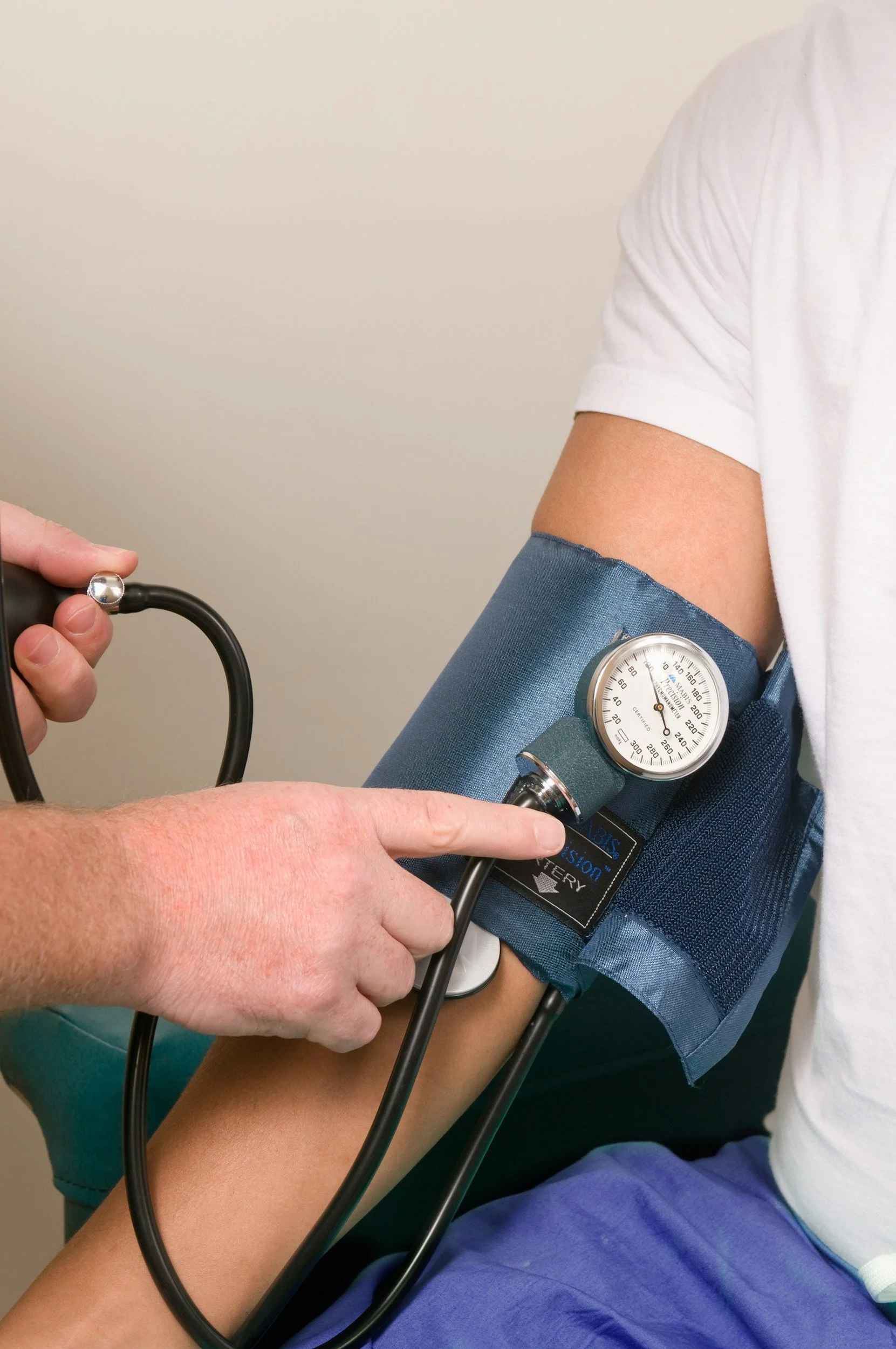
On a routine checkup, his blood pressure is a little high. He's prescribed medication to bring it down. Which works - initially. But because nothing else changes, his body detects it's artificially low and compensates. The dose gets upped. Then upped again.
Eventually, John takes Dave up on his offer to hit the gym. Changes what he's eating. Cuts back on the drinks.
The weight comes down. So does the blood pressure. Eventually he doesn't need the medication at all.
The lifestyle that started it all was never considered, until it was.
Which, in the end, was the only thing that actually moved the needle.
Anxiety… a clever adaptation
Impacting roughly 1 in 4 adults and an alarming proportion of teenagers, anxiety diagnoses have exploded over the last two decades. Ever considered why?
Here’s something worth sitting with before we rush into medications:
What if anxiety isn’t a mistake?
Your brain’s anxiety pathways evolved over hundreds of thousands of years to detect threat, and mobilise your body to respond.
In an ancestral environment, where there was a real chance of being eaten by predators - you’d feel the adrenaline surge, escape the predator, and the system would reset.
Now consider what we’re asking that same nervous system to navigate today:
Chronic sleep deprivation, ultra-processed foods driving inflammation, curated algorithms on screens designed to emotionally provoke, work demands that never allow us to switch off.
Consider the typical 16-year-old girl - let’s call her Sarah.
She sleeps 6 or 7 hours a night because she stayed up late watching Netflix and messaging friends, consumes highly processed foods, spends 7-9 hours a day on her phone as the average teen does. Juggling her social status, her school workloads and maybe a part-time job.
A typical doctor’s visit (6-15 mins in Australia) might not be enough time to sufficiently address all the lifestyle factors contributing to her overstimulated nervous system, and she might walk away with a prescription for an SSRI.
The medication may silence the alarm… she might feel a little less anxious.
But the fire… her frantic life? Still burning.
Nobody asked Sarah how she was sleeping, or what she was eating, or if she was feeling fulfilled with how her life is going.
And yet research confirms all this: the causal link between sleep deprivation and anxiety symptoms. Ultra-processed food being associated with a 48% increased likelihood of anxiety.
Sarah’s anxiety isn’t a “chemical imbalance” requiring correction from the outside in. Sarah’s anxiety is a cry from her brain about the conditions she’s living in.
The most powerful prescription we could write her isn’t a pill.
It’s sleep, real food, less screens, more faces, more movement. Maybe some time in nature.
Not because these are nice ideas - but because they’re the conditions her nervous system was built for, and hasn’t been getting.
These examples aren’t a criticism of individual doctors or practitioners. Most are genuinely caring and kind humans doing the best they can within a system designed for efficiency and disease management.
But the result of this system?
Doctors burnt out and unfulfilled. Patients underserved. And the entire community losing loved ones earlier than necessary.
Treating and managing disease - is not the same thing as creating health.
The Body Already Knows
The human body carries an built-in capacity for health.
It knew how to form your entire body from a single cell from your mum and a single cell from your dad.
It knows how to sleep, how to heal, how to regulate, how to thrive.
It just needs the right conditions.
Sleep, Nutrition, Movement, Emotional health, Strategies for stress management, Connection to others.
Each of these areas are deep - deep enough that we’ll explore them slowly in the coming newsletters, as they deserve more than a paragraph.
But for now, sit with this underlying idea:
Health doesn’t come from the Outside-In…
from consuming pills, or cutting out body parts.
Health comes from the Inside-Out
when we give our body the right conditions
Conditions we’ll continue to explore soon.
Until next time,
Mick
What about you? As we enter autumn, what will you do with your extra hour? I'd love to hear what seasonal practices you've discovered that actually work for your body and whether you've noticed the difference that this single hour of sleep can make
