
I'm worried about our attention
Do ADD/ADHD labels help? Or keep us stuck in a broken lifestyle?
I was having coffee with a group of other business owners recently. As we were talking about some recent wins, I mentioned about one of my younger clients, whose parents had noticed some changes in their attention since we'd started working on their nervous system.
Nothing super dramatic, just more settled. Better attention.
That one comment set off a series of comments from around the table about our challenges with maintaining attention and focus. Working from multiple screens. Carrying multiple phones. One business owner admitted her frustration with her constantly pinging inbox dragging her attention away from her actual work.
Another mentioned that some of the kids in her son's friendship group were now on medication for ADD/ADHD, and a few of the parents have quietly been told they should probably get assessed too.
Different people, different ages, all struggling with the same thing: an attention that won't seem to focus.
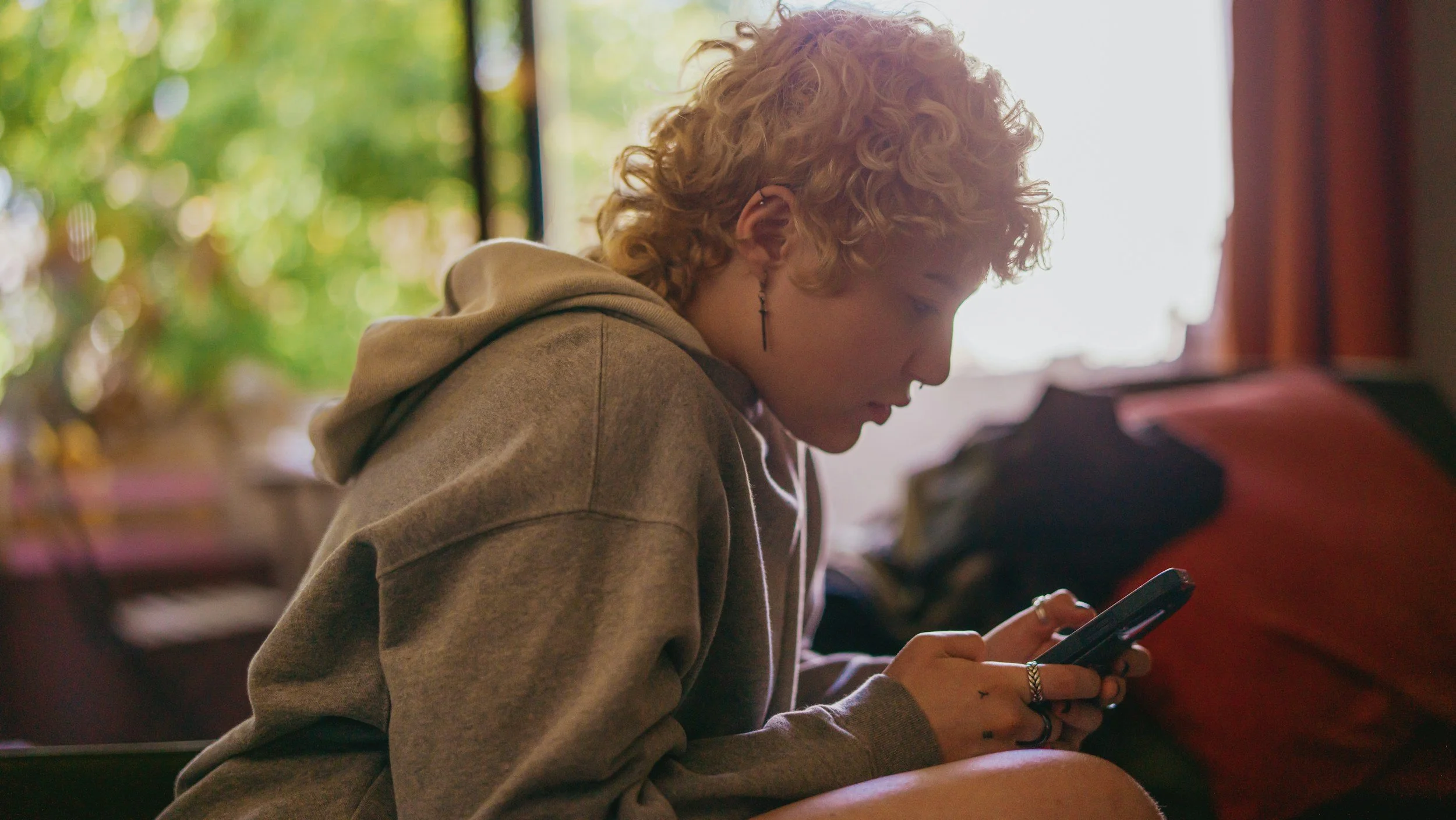
The detector isn't broken
To use my previous analogy - when the smoke detector goes off, we don't take the batteries out and consider it fixed. We go looking for the fire.
But that's what seems to be happening with attention right now.
ADD and ADHD diagnosis rates in children have climbed this past decade, and the reflexive response is often medication, often before anyone has even asked the question: what else has changed in that child's life?
To be upfront about my lane here - I'm not a psychiatrist, and telling any family whether medication is right for their child, is outside of my scope. There absolutely are cases where it seems to help in the short term.
My concern isn't as much about the medication itself.
It's with it being the first question asked, rather than one of the last - before anyone has looked properly at sleep, screens, and the sheer sensory load a lot of these kids (and us adults) are all carrying.
Let’s start with what the medication actually does, because that part isn't disputed.
Stimulants reliably reduce the day-to-day symptoms of ADHD while a child is taking them. What's less proven is whether these short-term improvements mean anything years down the track.
The largest, longest trial ever run on childhood ADHD treatment followed kids for eight years. By the end of it, which treatment a child had received in the first fourteen months barely mattered. What predicted how they were doing years later wasn't the medication, it was how significant their symptoms had been to begin with.
So the honest summary is: effective at managing the symptoms while it's being taken, but with little evidence it alters the longer-term trajectory.
Then there's the obvious safety question. Like any medication, stimulants come with side effects, the most documented of these being appetite suppression which can mildly slow growth. Worth an honest mention too: the evidence on cardiovascular risk with long-term stimulant use is genuinely mixed. Some studies find no link, but one more recent long-term study did find one. It's a flag worth noting because, as is the case with many prescriptions - there’s often not much talk of ever stopping, or weaning off these medications.
The kid who can't focus for twenty minutes, but can for six hours
Here's the bit that I think gets overlooked. Take gaming for example.
The teen boy who can't hold attention for twenty minutes in a maths class can sit in front of a video game, fully attentive, for six straight hours (I could’ve easily played Grand Theft Auto for longer than this in a single sitting in my teens!)
If ADD/ADHD were a simple, neurological or chemical imbalance - that shouldn't be possible. A broken detector doesn't work perfectly in one room and fail in another.
What that tells me is that maybe we're not looking at a disorder so much, but rather a perfectly adaptive response to two very different stimuli.
The gaming environment is designed by neuroscience-informed, behavioural psychologists to specifically hold attention with variable rewards, constant novelty and instant feedback.
The other is a static classroom asking a developing brain to sit still and listen to one voice for forty-five minutes.
It's not that the child can't focus. It's that focus has been trained, deliberately, to go somewhere else.
There's a deeper structural problem sitting underneath this too. A single classroom is expected to somehow suit twenty-five different kids, each taking in and processing the world in their own way, yet we grade and assess every one of them against the same yardstick: sit, listen, absorb information delivered the same way, regurgitate information for the test, then repeat.
Some kids genuinely thrive in that structure - I was one of them. But many don't, not because their brain is faulty, but because that wasn’t aligned with how they learn. Or whether they found the material interesting.
Not an easy fix though…
ADD, or sleep deprived?
There's a body of research here that deserves far more attention than it gets (pun very much intended).
Symptoms of sleep deprivation are inattention, impulsivity, and in kids, hyperactivity - that looks clinically almost identical to ADHD.
A literature review shows sleep problems in 25 to 55% of children with ADHD, and up to 75% in adolescents. And in some documented cases, fixing sleep issues resolved the attention issue entirely.(1)
Closer to home, an Australian randomised trial found moderate to severe sleep problems in 45% of children with an ADHD diagnosis, serious enough to affect school attendance, family functioning and the parents' own mental health as well.(2)
Before a diagnosis is given, and a script written, a genuinely simple question might be worth asking: is this a disorder or a household that isn't sleeping properly?
Given that modern kids are getting noticeably less sleep than a generation ago, largely thanks to screens in bedrooms and evenings that stretch later, it's a question that should be asked far more often than it currently is.
Built to be addictive
Which brings me to the screens themselves. The average adult now picks up their phone somewhere between ninety and two hundred times a day.
Teenagers are logging seven to eight hours a day of recreational screen time.
This isn't incidental - it's the product of deliberate design, built by teams that include actual behavioural psychologists, using the same principles that make poker machines so hard to walk away from: unpredictable rewards, delivered on an unpredictable schedule.
Pull to refresh. Infinite scroll. Notifications timed for maximum surprise.
It works on adult brains. Developing ones never stood a chance!
What’s the cost of all this attention switching? Research out of UC Irvine has suggested it takes roughly twenty minutes to fully return to the depth of focus you had before stopping a task to check email.(3)
So, check one email, and you're not back to full focus a moment later. You're rebuilding it, slowly, for the next twenty minutes.
A generation ago, none of this existed. No smartphones, no infinite scroll, no algorithms engineered by Big Tech whose job was to keep you looking at it. And it's not a coincidence that attention difficulties weren’t as common then.
Practising distraction
I listened to an interview recently with a Hindu monk named Dandapani, who authored the book: The Power of Unwavering Focus. He gave a simple analogy that has stuck with me since.
He points out that if you practised basketball for two or three hours a day, after six months you'd be pretty decent, and after a few years you'd be closing in on mastery.

Distraction works exactly the same way. If you practise being distracted for hours a day, every single day, you get remarkably good at being distracted. We're not failing to focus. We're becoming extremely well trained at not focusing, because that's what we've been rehearsing more.
And as much as I still tussle with distraction myself - I notice two patterns in people who seem to have escaped the distraction problem:
They practice attention, instead of distraction
Single-tasking, not multi-tasking. Eating a meal without a screen nearby. Driving the car without putting on a podcast or music. Like Buddhist teacher Thich Nhat Hanh suggests: when washing dishes, wash the dishes. Not planning the next task, not half listening to a podcast. Just the dishes.
They have a genuine sense of Purpose
When someone is absorbed in building something that matters to them, there isn't much room left over for distraction. They're not resisting their phone through sheer willpower - they're just too focused on something that matters more. It can help to ask the question: Am I building a life that I can’t be distracted from?
Practicing attention
None of this is a call to ditch your phone or not fill a script.
It's an invitation to ask the question before reaching for the label: what is this attention pattern actually adapting to? Is there enough quality sleep? How much of the day is spent using tools built by engineers whose job is to fragment our attention? Do our kids have something in their life meaningful enough to warrant their full engagement?
It sounds almost too small to matter. But attention, like anything else in the body, responds to practice.
If we want it to hold steady when it matters, in a classroom, in a conversation, at your own kitchen sink, it needs the practice somewhere. We need reps, not just pills.
So maybe the kids with the label and the script might not be failing. Their nervous systems might be doing exactly what nervous systems do: adapting to signal. Maybe it's worth asking what signal the rest of us are adapting to, before we decide there's something broken with our children’s brains.
Mick

~ Have you noticed the struggle with attention? A helpful exercise can be to (with self-compassion) check the Screen Time settings of your phone. How many pick ups today? How many notifications? If there's one tactic that I've found the most helpful in claiming back my attention - it's turning off notifications and using my phone as a tool, rather than it using me.
Sources
The Dandapani Interview: https://www.youtube.com/watch?v=h99ps9UKSHs&list=PLcdXvEekPv1GRqbvjVf41TrYQhjHRO1_q&index=3
(1) Sleep problem prevalence in children with ADHD: Sleep disturbances in children and adolescents with attention-deficit/hyperactivity disorder: A narrative review, World Journal of Clinical Pediatrics (2025), drawing on the meta-analysis by Cortese et al. https://pmc.ncbi.nlm.nih.gov/articles/PMC12620782/
(2) Australian ADHD prevalence (Young Minds Matter survey, Lawrence et al. 2015): AIHW, Australia's Children, Children with mental illness. https://www.aihw.gov.au/reports/children-youth/australias-children/contents/health/children-mental-illness
(3) Task-switching and refocus time: Mark, G., Gudith, D., & Klocke, U. (2008). The Cost of Interrupted Work: More Speed and Stress. University of California, Irvine. https://ics.uci.edu/~gmark/chi08-mark.pdf
